


Motor coaches are everywhere once you start noticing them. You can see them outside hotels picking up conference groups. They carry sports teams between cities and take tour groups to different attractions. These vehicles are built for comfortable group travel therefore, commonly used for both short and long-distance trips.
People have many questions before renting, buying or even driving a motor coach. What is a motor coach? How many people does it hold? Does it have a bathroom? Do you need a CDL to drive one? How much does it cost? This guide answers the most common questions so you can understand how motor coaches work and when they are the right choice.
What Is a Motor Coach Vehicle and How Is It Different from a Regular Bus?
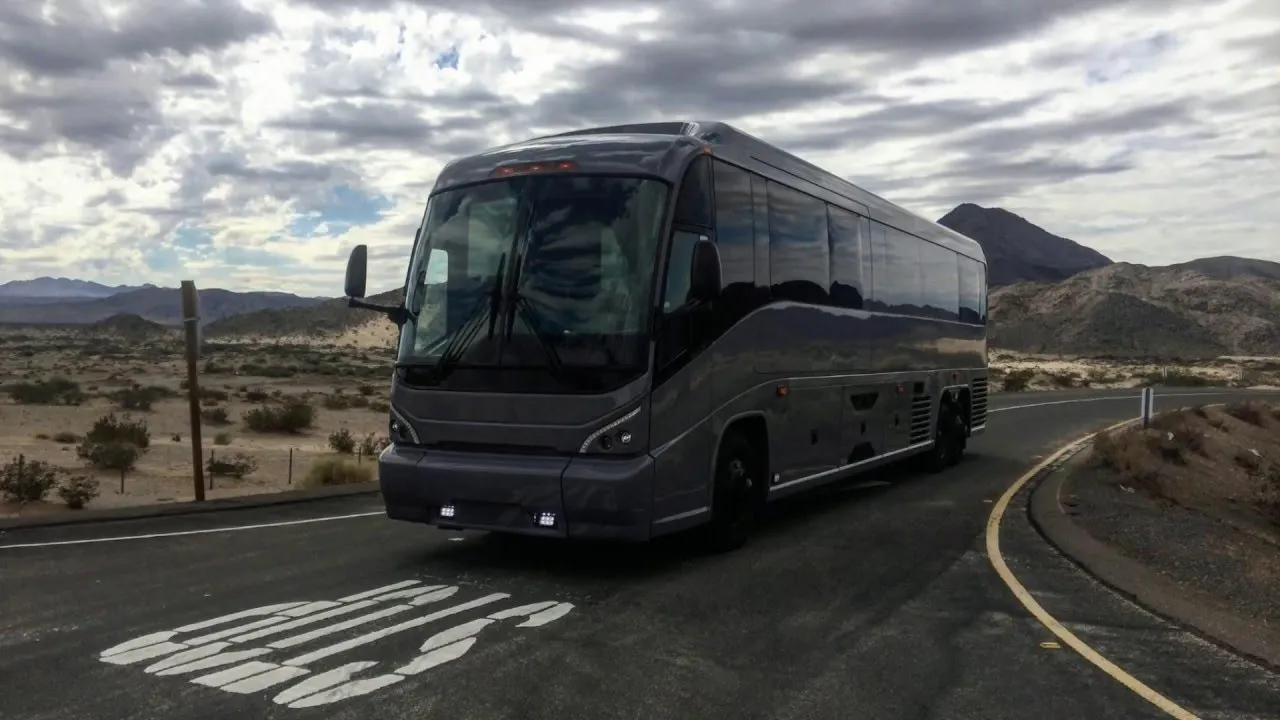
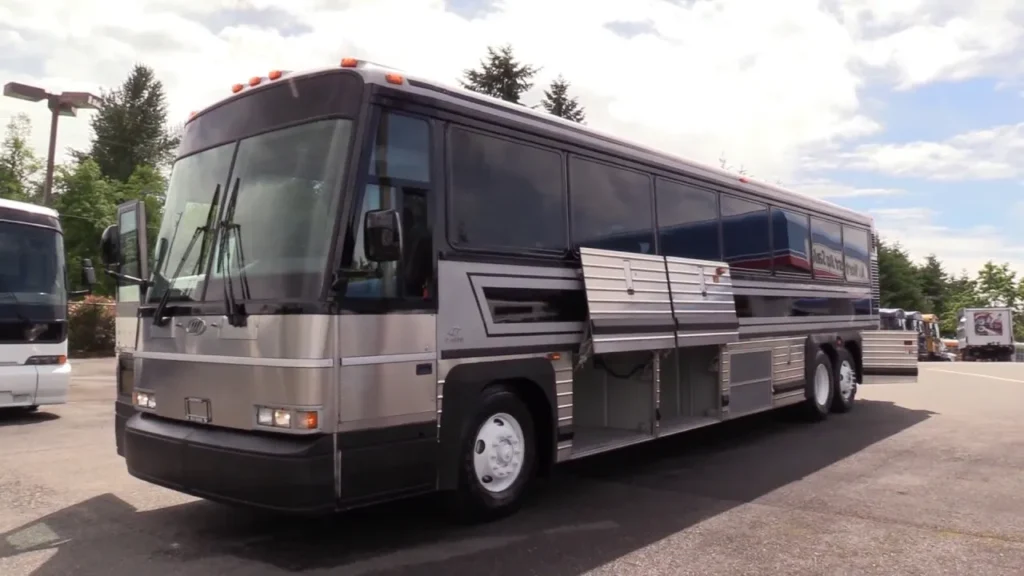
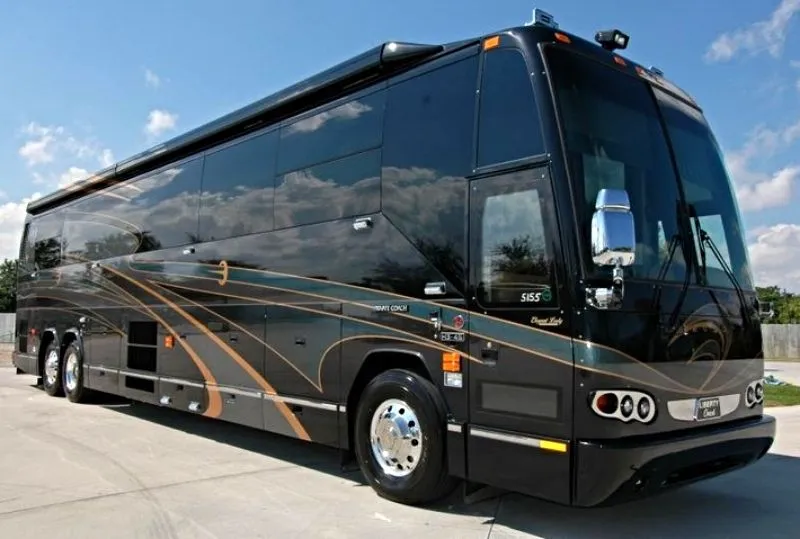
A motor coach is a large passenger vehicle. It is built for long distance travels. The key difference between a motor coach and a standard bus is the level of comfort given by them. A transit bus is built for short trips around urban routes. The passengers get on and off at each stop. The seats are basic and the standing room is also a part of the design for standing passengers.
A motor coach is built to carry passengers comfortably over long distances. It has reclining seats with plenty of legroom, an onboard restroom, overhead luggage storage, undercarriage cargo bays, climate control and modern coaches with WiFi and USB charging. The entire bus design purpose is to provide passengers complete comfort on long-distance journeys.
What Is Motor Coach Driving Experience Like?
Driving a motor coach is different from driving a standard vehicle or even a large van. The size and weight of the vehicle are large therefore it needs a skilled driver to handle it.
A motor coach is typically 45 feet long and almost 13 feet tall. Because of its large size, it needs extra space to turn and is harder to park than a regular vehicle. Reversing a motor coach requires camera and spotter guidance. The driver needs to understand how the vehicle’s weight affects braking distance, especially on highways.
How Long Is a Motor Coach and How Much Does a Motor Coach Weigh?
Motor coaches come in different lengths depending on the configuration and use.
Common motor coach lengths:
| Configuration | Approximate Length |
| Standard motor coach | 40 to 45 feet |
| Commuter or regional coach | 35 to 40 feet |
| Mini coach | 28 to 35 feet |
| Double-decker coach | 40 to 45 feet |
A standard empty motor coach weight is approximately 30,000 to 40,000 pounds. When it is fully loaded with passengers and luggage, the total weight can reach 50,000 to 60,000 pounds. This is why driving this vehicle requires a commercial driver’s license and why braking distances are longer than a standard vehicle.
How Many People Does a Motor Coach Hold and How Many Seats Are on a Motor Coach Bus?
| Coach Type | Passenger Capacity |
| Standard 40-45 ft coach | 47 to 55 passengers |
| Luxury coach with wider seats | 40 to 45 passengers |
| Mini coach | 24 to 35 passengers |
| Double-decker coach | 70 to 80 passengers |
Do Motor Coaches Have Bathrooms?
Yes, most full size motor coaches have an onboard restroom. The restroom is typically located at the rear of the vehicle. It is compact and similar in size to an airplane lavatory. But it is fully functional for long distance travel.
The onboard restroom is one of the most practically important features of a motor coach for group transportation. Mini coaches and smaller vehicles may not include restrooms. Always confirm with the provider whether the vehicle assigned to your booking has an onboard restroom is important for your group.
Do You Need a CDL to Drive a Motor Coach?
Yes. A Commercial Driver’s License is required to operate a motor coach commercially in the United States. Driving a vehicle that carries 16 or more passengers for compensation requires a CDL with a Passenger endorsement. Motor coaches also fall into the Class B or Class C commercial vehicle category depending on their GVWR, which requires the appropriate CDL class.
Additional requirements for commercial motor coach drivers include:
- DOT physical examination and medical certificate
- Background check
- Drug and alcohol testing compliance
- Hours of service compliance under FMCSA regulations
- Passenger endorsement (P) on the CDL
- Air brake endorsement if the vehicle has air brakes
How to Become a Motor Coach Driver?
The general steps to becoming a motor coach driver:
- Obtain a standard driver’s license if you do not already have one
- Pass the DOT physical examination to obtain a medical certificate
- Study for and pass the CDL written knowledge tests including the general knowledge, passenger, and air brakes tests
- Obtain your CDL learner’s permit
- Complete behind-the-wheel training with a licensed CDL holder or formal training program
- Pass the CDL skills test including pre-trip inspection, basic vehicle control, and road test
- Obtain your Passenger endorsement
- Apply with motor coach companies that offer paid training programs for new CDL holders
How Much Do Motor Coach Drivers Make?
Motor coach driver cost varies by employer, location, experience and whether the driver is full-time or seasonal.
General motor coach driver salary ranges:
| Experience Level | Annual Salary Range |
| Entry-level | $35,000 to $45,000 |
| Experienced (3 to 5 years) | $45,000 to $60,000 |
| Senior or specialized | $60,000 to $80,000+ |
| Owner-operator | Variable, often higher |
How Much Does a Motor Coach Cost to Buy?
Buying a motor coach is a big capital investment whether purchased new or used.
New motor coach prices:
| Coach Type | Approximate Price |
| Standard transit-style coach | $400,000 to $600,000 |
| Premium charter coach | $500,000 to $650,000 |
| Luxury VIP coach | $600,000 to $1,000,000+ |
| Double-decker coach | $700,000 to $1,200,000 |
Used motor coaches are available at lower prices.
| Used Coach Age | Approximate Price Range |
| 3 to 5 years old | $150,000 to $350,000 |
| 6 to 10 years old | $80,000 to $175,000 |
| Over 10 years old | $30,000 to $90,000 |
What Is the Best Motor Coach to Buy?
Prevost
Prevost is one of the most premium standard motor coach manufacturers in North America. Where are Prevost motor coaches made? Prevost motor coaches are made in Sainte-Claire, Quebec, Canada. They are built by Prevost Car Inc., which is owned by Volvo Group. Prevost coaches are known for exceptional build quality, long service life and a strong resale market. They are a preferred choice for luxury charter operations, touring companies and entertainers.
MCI
Motor Coach Industries is another leading North American manufacturer and produces some of the most used charter and commuter coaches in the country. MCI coaches are known for reliability and their parts are easily available.
Van Hool
Van Hool is a Belgian manufacturer. It has a strong presence in the North American market. It is known for producing durable and well-engineered coaches at competitive prices.
BYD
BYD has entered the market with electric coach options. These buses are becoming more popular as transportation companies look for ways to reduce fuel costs and lower emissions over time.
What Is a Thor Motor Coach and Are Thor Motor Coaches Good?
Thor Motor Coach is a different category from commercial passenger coaches. Thor Motor Coach is a brand of recreational vehicles manufactured by Thor Industries, which is the largest RV manufacturer in the world.
Thor Motor Coach produces Class A motorhomes, which are large recreational vehicles. These are leisure vehicles for personal travel and camping, not commercial passenger vehicles.
Are Thor motor coaches good? Thor Motor Coaches have mixed reviews by owners. The company is one of the largest RV manufacturers, so there are many customer reviews available online. Quality and reliability experience vary by model and manufacturing year. Before buying a specific Thor motor coach, it is a good idea to read recent owner reviews and compare different models.
What’s the Difference Between a Motorhome and an RV?
An RV is the broad category. RV stands for Recreational Vehicle and includes any vehicle or trailer used for leisure travel and temporary living.
The RV category includes:
- Class A motorhomes
- Class B motorhomes
- Class C motorhomes
- Travel trailers
- Fifth-wheel trailers
- Pop-up campers
A motorhome is an RV that has both the driving area and the living space in one vehicle. Class A, Class B and Class C are all motorhomes because they can be driven on their own. Trailers and other towable RVs are different because they need another vehicle to pull them.
So all motorhomes are RVs but not all RVs are motorhomes.
How Much Does It Cost to Rent a Motor Coach?
Motor coach rental pricing is based on hourly rates, daily rates or mileage depending on the specific booking type. Typical rental pricing framework:
| Rental Type | Approximate Cost |
| Hourly rate | $150 to $350 per hour |
| Half-day (4 to 5 hours) | $600 to $1,200 |
| Full day (8 to 10 hours) | $1,000 to $2,000 |
| Multi-day rate (per day) | $900 to $1,700 |
| Per mile (long distance) | $3 to $7 per mile |
Additional costs that are usually added in most motor coach rental quotes:
- Driver meals and per diem on full-day bookings
- Fuel surcharge on longer distance trips
- Gratuity for the driver
- Tolls on applicable routes
- Parking or staging fees at specific venues
How to Start a Motor Coach Business?
To start a motor coach business, a transportation regulatory environment and standard business setup are both required.
Key steps to starting a motor coach business:
- Form your business entity
- Obtain an Employer Identification Number from the IRS
- Register with the Federal Motor Carrier Safety Administration
- To obtain a DOT number and MC authority for passenger transportation
- Purchase or lease your motor coach vehicle
- Obtain commercial passenger vehicle insurance meeting FMCSA minimums
- Hire CDL-licensed drivers or obtain your own CDL
- Implement drug and alcohol testing programs as required by FMCSA
- Register with your state’s Department of Transportation if required
- Market your services to event companies, corporate clients, schools, and tour operators
Book a Motor Coach for Your Next Group Trip With AA Limousine and Sedan
AA Limousine and Sedan provides professional motor coach service for corporate retreats, conference transportation, group tours and large event shuttles across Washington DC, Texas, Virginia and Maryland. Our motor coaches are maintained to the highest standard and operated by CDL licensed, experienced and commercial drivers.
Contact AA Limousine and Sedan today to book the right vehicle for your next group trip.
FAQs
What is a motor coach?
A motor coach is a large, high-quality passenger vehicle built for long-distance group travel. It has reclining seats, an onboard restroom, overhead storage, luggage bays and modern coaches include WiFi and USB charging.
Do motor coaches have bathrooms?
Yes, most full-size motor coaches have an onboard restroom at the rear of the vehicle. Mini coaches and smaller regional vehicles may not. Always confirm with your provider before booking if this matters for your group.
Do you need a CDL to drive a motor coach?
Yes. For commercially operating a motor coach, a CDL is required, with a Passenger endorsement and compliance with FMCSA regulations including DOT physical certification and drug and alcohol testing.
How many seats are on a motor coach?
Standard full-size motor coaches seat 47 to 55 passengers. Luxury configuration motor coaches with wider seats and more legroom may seat 40 to 45.
Where are Prevost motor coaches made?
Prevost coaches are manufactured in Sainte-Claire, Quebec, Canada by Prevost Car Inc., a company owned by the Volvo Group.
How much does a new motor coach cost?
New premium charter motor coaches cost approximately $500,000 to $650,000. Luxury VIP coaches can exceed $1,000,000. Used coaches are available from $30,000 to $350,000 depending on age and condition.
What is the difference between a motorhome and an RV?
An RV is the broad category of all recreational vehicles including trailers and towables. A motorhome is a self-propelled RV where the engine and living space are integrated into one vehicle. All motorhomes are RVs but not all RVs are motorhomes.