

This is one of the most common questions people ask before visiting Washington DC for the first time. They are used to needing a car everywhere. They wonder if DC will be the same. The honest answer is no. For most visitors, you do not need a car in Washington DC. In fact, bringing or renting a car can make your trip harder rather than easier.
But the full answer is a little more detailed than just yes or no. It depends on where you are staying, where you plan to go, how long you are visiting and what your trip looks like day to day. This guide walks through all of it so you can make the right decision before you arrive.
Why Most Visitors Do Not Need a Car in Washington DC
Washington DC was designed before cars existed. The street layout is a planned grid with wide avenues cutting across it diagonally. The city is compact in a way that American cities are not. The National Mall and many of the famous parts of the city are built for people on foot.
The Metro connects most of the areas visitors want to visit. Rideshare is available almost everywhere at any time of day. Bikes and electric scooters are also good options for short trips. Many popular areas such as the National Mall, Georgetown, Capitol Hill and Dupont Circle are also easy and enjoyable to explore on foot.
For a typical DC vacation covering the main tourist sights, museums, monuments, restaurants and neighborhoods, a visitor can go an entire week without needing to get into a car. This is not true of most major American cities.
What Happens If You Drive to Washington DC or Bring a Car
If you decide to drive to Washington DC or rent a car, once you arrive you will quickly discover that most DC residents who have lived there for years still do not own cars.
Parking Is Expensive and Hard To Find
Parking in central Washington DC is very expensive in the country. Garage parking in downtown DC routinely costs $25 to $50 per day. Some garages near popular areas charge by the hour. Street parking exists here but is limited and in many residential areas requires a permit that visitors cannot get.
If you are staying at a hotel in downtown DC, expect to pay an additional $40 to $70 per night for parking. This cost is not advertised on booking sites and surprises many first time visitors.
Traffic Is Genuinely Difficult
Washington DC traffic is consistently ranked among the worst in the country. There is a unique street layout, frequent road closures for government motorcades and security events, heavy commuter traffic from Maryland and Virginia and a large number of major government buildings in a small area, creating traffic conditions that even experienced DC drivers feel frustrating.
During rush hour, a trip that would take 15 minutes on the Metro can take 45 minutes or more in a car. During major events, presidential visits, inaugurations, parades, or large protests, entire neighborhoods can be closed off to vehicle traffic entirely.
Driving Near Federal Buildings Has Restrictions
Many streets around the White House, Capitol Building, State Department, and other major government buildings are restricted or closed to regular traffic. Navigation apps sometimes route drivers toward streets that are blocked, which creates confusion for visitors who are not familiar with the city.
The Real Costs of Having a Car During a DC Vacation
Before deciding to drive or rent a car for your Washington DC trip, let’s estimate the real costs so you can make a decision.
Sample cost of having a car in DC for 5 days:
| Cost Item | Estimated Amount |
| Car rental for 5 days | $250 to $450 |
| Hotel parking for 5 nights | $200 to $350 |
| Gas for driving around the city | $40 to $80 |
| Parking at attractions and restaurants | $50 to $150 |
| Potential parking tickets | $50 to $100 per ticket |
| Total estimated car cost | $590 to $1,130 |
Now compare that to getting around without a car:
| Transportation Option | Estimated Cost for 5 Days |
| Metro daily passes or loaded SmarTrip card | $40 to $80 |
| Rideshare for evenings and late nights | $50 to $120 |
| Bikeshare or scooters for leisure | $20 to $40 |
| Total estimated no-car cost | $110 to $240 |
When You Might Actually Need a Car in Washington DC
You Are Staying Outside the City Center
If your hotel is in a suburban area near DC that is not close to any Metro station then you need to rent a car. Not all hotels near DC are Metro accessible. Before booking a hotel check whether it is within a comfortable distance of a Metro station.
You Are Traveling With Young Children or Elderly Family Members
Managing the Strollers, young children or elderly family members in Metro is challenging. The escalators at some DC Metro stations are among the longest in the world and are sometimes out of service. Having a car for a family trip with very young children or grandparents might improve the experience.
You Want To Visit Areas Outside the City
Washington, DC is surrounded by interesting day trip destinations. Mount Vernon, George Washington’s estate, is approximately 16 miles south. Shenandoah National Park is about 75 miles west. Annapolis, Maryland is about 35 miles east. If your trip includes day trips to destinations outside the Metro service area, a car for those specific days makes sense.
You Have Very Specific Schedule Requirements
If you have meetings, events, or commitments with fixed timing across multiple locations that are not easily connected by Metro, a car or private car service is a better and more reliable option.
Is Driving to Washington DC Worth It?
Many people choose to drive to Washington DC from nearby cities like Philadelphia, Baltimore, New York or Richmond rather than flying or taking the train. Whether this makes sense depends on how far you are coming from and what you plan to do when you arrive.
Driving from nearby cities:
| Starting City | Distance | Driving Time Off-Peak | Driving Time with Traffic |
| Baltimore, MD | 40 miles | 45 to 60 minutes | 75 to 120 minutes |
| Philadelphia, PA | 140 miles | 2.5 to 3 hours | 3 to 4.5 hours |
| Richmond, VA | 110 miles | 1.75 to 2.5 hours | 2.5 to 4 hours |
| New York, NY | 225 miles | 4 to 5 hours | 5 to 7 hours |
| Pittsburgh, PA | 245 miles | 4 to 4.5 hours | 5 to 6 hours |
The Amtrak Option
If you are coming from the Northeast the Amtrak Acela or regional train is often a better option than driving. The train drops you directly at Union Station in the center of Washington DC, which is on the Metro Red Line and within walking distance of the Capitol Building.
| Route | Amtrak Time | Driving Time |
| New York to DC | 2.5 to 3.5 hours | 5 to 7 hours |
| Philadelphia to DC | 1.5 to 2 hours | 3 to 4.5 hours |
| Baltimore to DC | 40 minutes | 75 to 120 minutes |
| Boston to DC | 7 to 8 hours | 8 to 10 hours |
DC Vacation Planning With a Car
If you decide to skip the car, here is how to structure your trip so transportation is never a problem.
Step One: Choose The Right Hotel Location
Stay in a hotel that is near a Metro station and walkable to major attractions. Good neighborhoods for car-free DC visitors are Dupont Circle, Logan Circle, Capitol Hill, Penn Quarter, Navy Yard, and the area around the National Mall. These locations give Metro access and walkable destinations within easy reach.
Step Two: Get a SmarTrip Card When You Arrive
SmarTrip cards are rechargeable tap and go cards that work on the Metro, DC buses and some suburban transit systems. You can buy one at any Metro station or online before you arrive.
Step Three: Use Rideshare for Gaps
The Metro does not run 24 hours. After midnight on weekdays and after 1AM on Friday and Saturday nights Metro service stops working. In this situation rideshare covers rides. Have the Uber or Lyft app ready on your phone before you arrive.
Step Four: Walk as much as you can
The Washington DC layout is very helpful for walking. The architecture, the monuments, the parks and the neighborhoods are all best experienced at a walking pace. Build in extra time at each destination to walk the surrounding area rather than rushing to the next Metro station.
Rideshare in DC
Rideshare is available and reliable in Washington DC for most situations. Both Uber and Lyft operate throughout the city. The main thing to know about rideshare in DC is that pricing is variable. Standard rates are reasonable for trips. But during major events, during rush hours and late at night surge pricing can make a short trip very expensive.
When DC rideshare surge pricing occurs:
- During and immediately after major events at Capital One Arena, Nationals Park or Audi Field
- Cherry blossom season when the Mall area is overwhelmed with visitors
- Presidential inauguration and major state events
- New Year’s Eve and major holidays
- Friday and Saturday evenings after 11 PM near nightlife areas
Private Car Service in DC
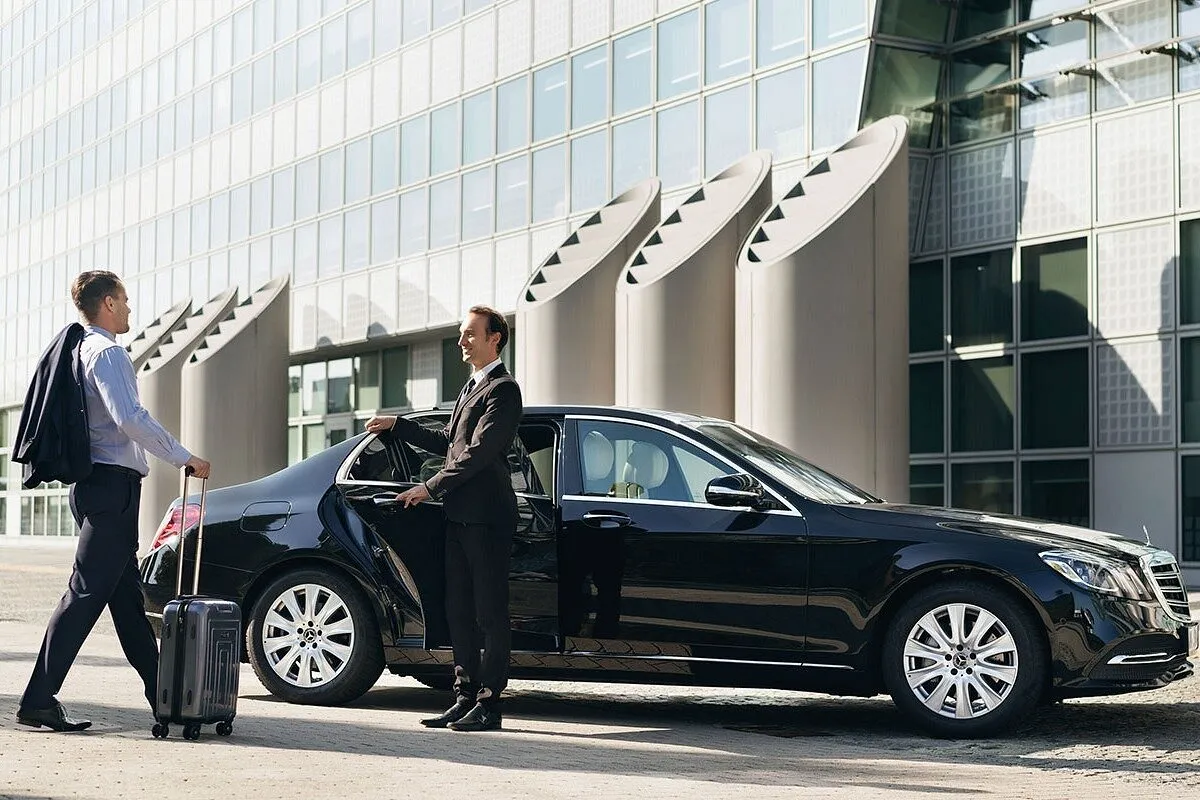
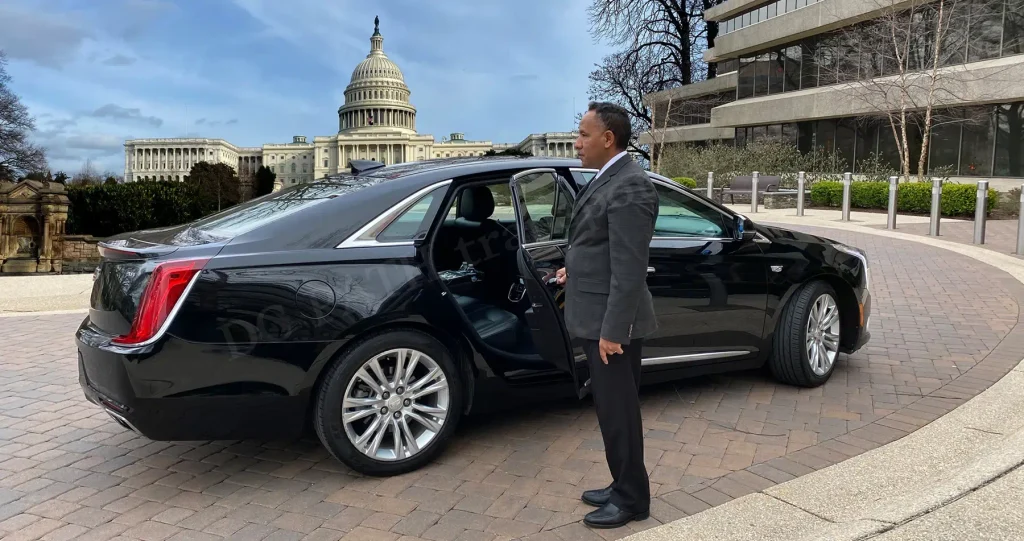
Private car service in DC is for people who want something better than a regular rideshare. It may not be needed for every trip, but it is a good choice when presentation matters or being late is not acceptable, such as airport arrivals and departures, business meetings and VIP transfers.
Private car service in DC is different from rideshare. They provide a dedicated chauffeur who is confirmed before the booking day. The vehicle is a maintained premium car. The rate is fixed and does not surge. And for airport pickups, the driver tracks your flight so you do not have to manage any coordination after a long journey.
When private car service makes the most sense in DC:
- Arrival at Reagan National, Dulles or BWI when you want a confirmed driver and no surprises
- Business travel where the vehicle and driver reflect a professional standard
- Special occasions like state dinners, Kennedy Center performances, or White House events
- VIP and executive travel where a consistent, professional transportation experience is required
- Group corporate transportation for teams moving between multiple meetings in the city
Plan Your DC Trip with All American Limousine and Sedan
Washington DC is one of the most accessible major cities in the United States without a car. The Metro is excellent, the walkable areas are beautiful, and rideshare fills in the gaps when needed. For most visitors, leaving the car at home or skipping the rental is the smarter, cheaper, and more enjoyable choice.
All American Limousine and Sedan Service provides professional private car service across Washington DC, Virginia, and Maryland for visitors and residents who want a reliable, confirmed transfer for airport arrivals and departures, executive travel, or any special occasion that calls for a professional transportation experience.
Contact All American Limousine and Sedan Service today to discuss your upcoming DC visit and get a quote for your specific transportation needs.
Frequently Asked Questions
Do you need a car in Washington DC?
For most visitors, no. The majority of trips that visitors need to make in DC are covered by the Metro, walking, rideshare and professional car service. Having a car adds parking costs and traffic stress.
Is it hard to find parking in Washington DC?
Yes. Parking in central DC is expensive and limited. Daily garage rates range from $25 to $50 or more. Street parking is metered and hard to find in busy areas. Most hotels charge $40 to $70 per night for parking.
Is it worth driving to Washington DC from nearby cities?
It depends. Driving from Baltimore, Philadelphia or Richmond is manageable, but consider parking your car at a suburban Metro station and taking the train into the city rather than keeping the car with you the whole trip.
How much does a DC vacation cost for transportation?
Without a car, transportation for a 5-day visit typically costs $110 to $240 including Metro passes and some rideshare use. With a car, the same trip costs $590 to $1,130 when parking and other car expenses are included.
Is rideshare reliable in DC?
Yes for most situations. Surge pricing is the main thing to watch for during major events, rush hours and late-night.